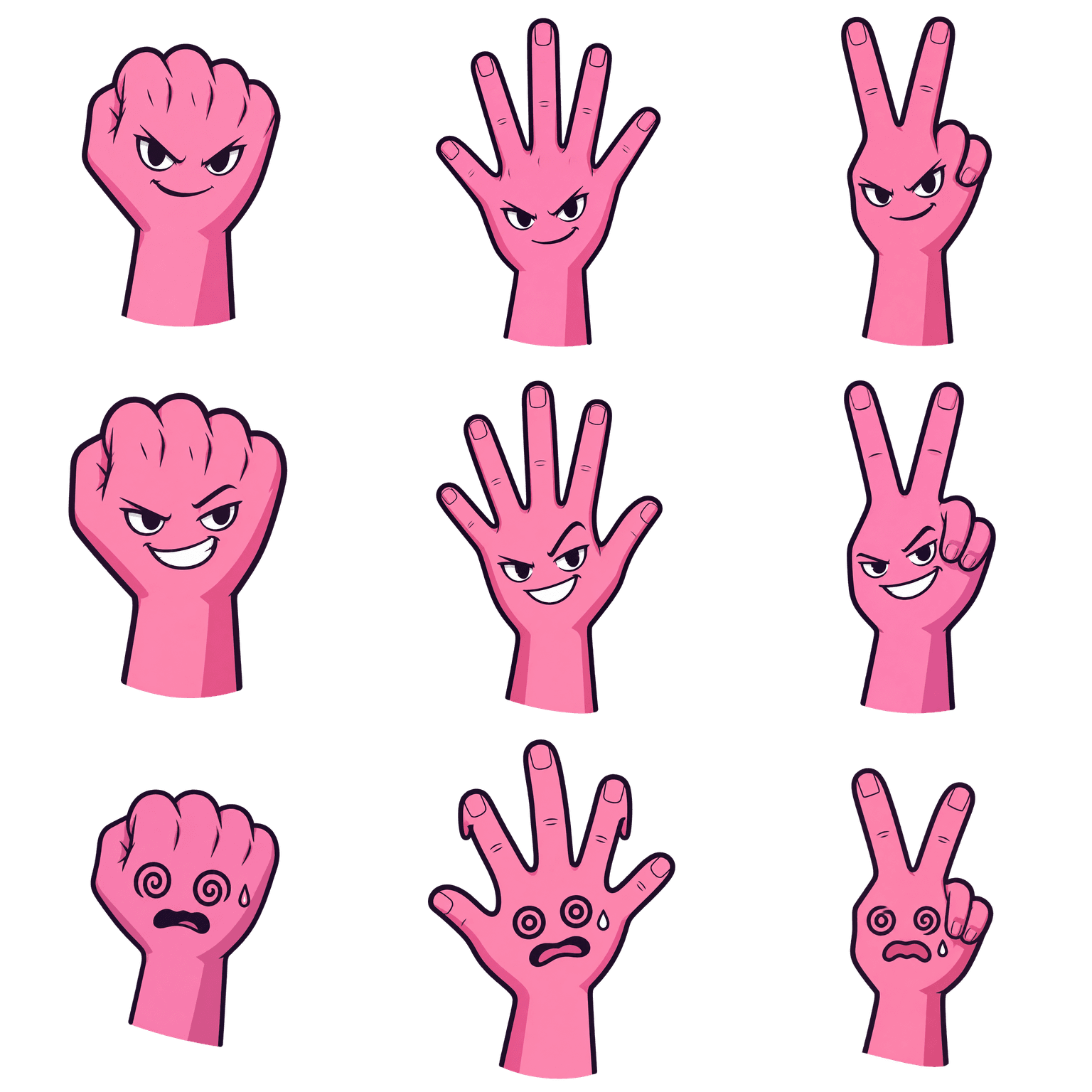
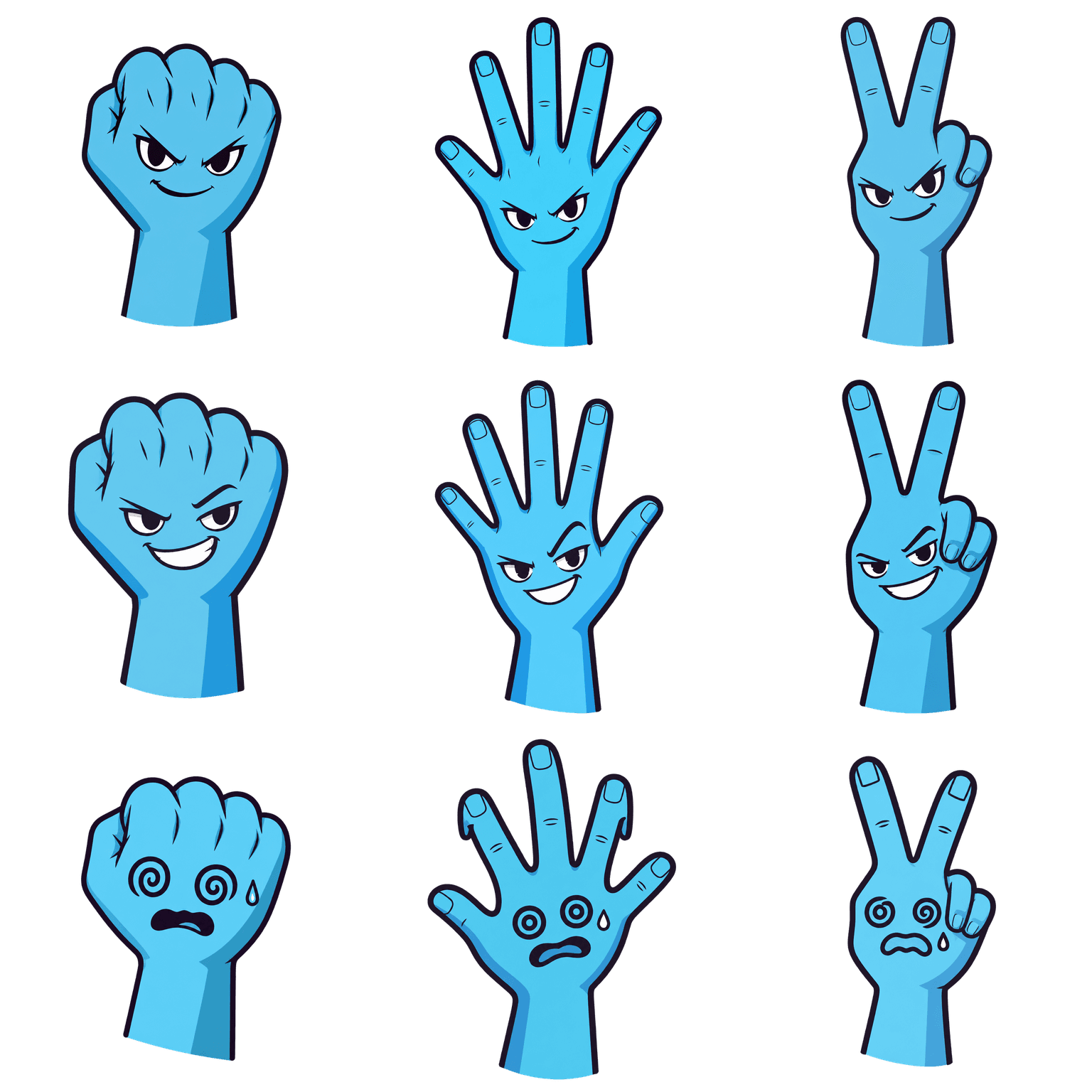
You
Computer
Best of three against a computer that learns how you play. Tap your throw, or show it to your camera.
You vs the computer · best of three
The camera is read on this phone, and nothing it sees is sent anywhere.
Tap your throw
The computer starts knowing nothing about you.
Against somebody choosing truly at random, nothing wins more than a third of the throws, and nothing loses more than a third either. Nobody plays like that. In a study at Zhejiang University, 360 students played 300 rounds each for real money, and over all those rounds the throws came out close to even: rock 36%, paper 33%, scissors 32%. The pattern was not in which throw people liked. It was in what they did next.
Winners stay. A player who has just won is much more likely to throw the same thing again than to change it. So when somebody beats you, expect the same throw back, and throw what beats it.
Losers move on, and in a predictable direction. After a loss, players most often switched to the throw that beats the one that just beat them: lose with rock to paper, and next comes scissors. Turned around, that is the rule worth remembering. After you win, throw what your opponent just threw. Your paper beat their rock, they move to scissors to beat your paper, and their own rock is what beats scissors.
Everybody repeats. Across the whole study, people threw the same thing twice more often than they switched either way, which is the opposite of what somebody trying to be random does. A run of the same throw is information, and so is a run of changes.
The first throw has no history, and folklore has an answer for it: beginners open with rock. We could not find a study of first throws to back that up, but rock was the most common throw overall in the Zhejiang study, and paper beats rock. It is a small edge, and it is all there is before anybody has thrown. The best reason to second-guess the obvious is a real one. In 2005 a Japanese company that could not choose between Christie's and Sotheby's to sell its art collection, led by a Cézanne expected to fetch up to $16 million, had the two auction houses settle it with rock paper scissors on paper ballots. Christie's took advice from a colleague's 11-year-old twins, who said rock was too obvious. Christie's wrote scissors, Sotheby's wrote paper, and Christie's got the sale.
The computer on this page plays on exactly these habits. It keeps a guess at your next throw for each of them (your favourite, what you do after a win and after a loss, what you follow each throw with, and how you answer its own last throw), scores every guess on how well it would have called you so far, and throws against the best. Against a player who always repeats a win and moves on after a loss, it wins about four throws in five. The way to beat it is the way to beat a person who knows all this: notice your own habits, and break them.
Played with hands, most games of rock paper scissors end in an argument about timing: somebody throws a fraction late, after seeing the other hand. The house rule that settles it is to throw on “shoot”, not after it, with a late throw losing. Agree on best of three before the first throw, too, rather than after somebody has lost one.
In a party room the argument cannot happen. Every phone locks its own throw in private, and the big screen shows them all at once, so nobody sees a hand before they have thrown their own.
Jan-ken is rock paper scissors: the Japanese name for the same three hands, and the game the modern version comes from. Hand games like it are much older in China, where one called shoushiling is described in a Ming-dynasty book from around 1600. The three-hand game took its modern form in Japan in the late nineteenth century and reached Europe and America early in the twentieth.
Rock paper scissors lizard Spock is a five-hand version invented by Sam Kass and Karen Bryla and made famous by The Big Bang Theory in 2008. Each hand beats two others and loses to two, so draws are rarer. This page plays the three-hand game, the one everybody already knows the hands for.
Rock Paper Scissors Showdown is also a party room game. Everybody joins on their own phone, the room is drawn into a knockout bracket of best-of-three matches, and the big screen reveals every match at once. A room of more than sixteen plays last hand standing: everybody throws against the screen's hand, and whoever loses to it is out, until one hand is left. Open a party room and put it on the night.